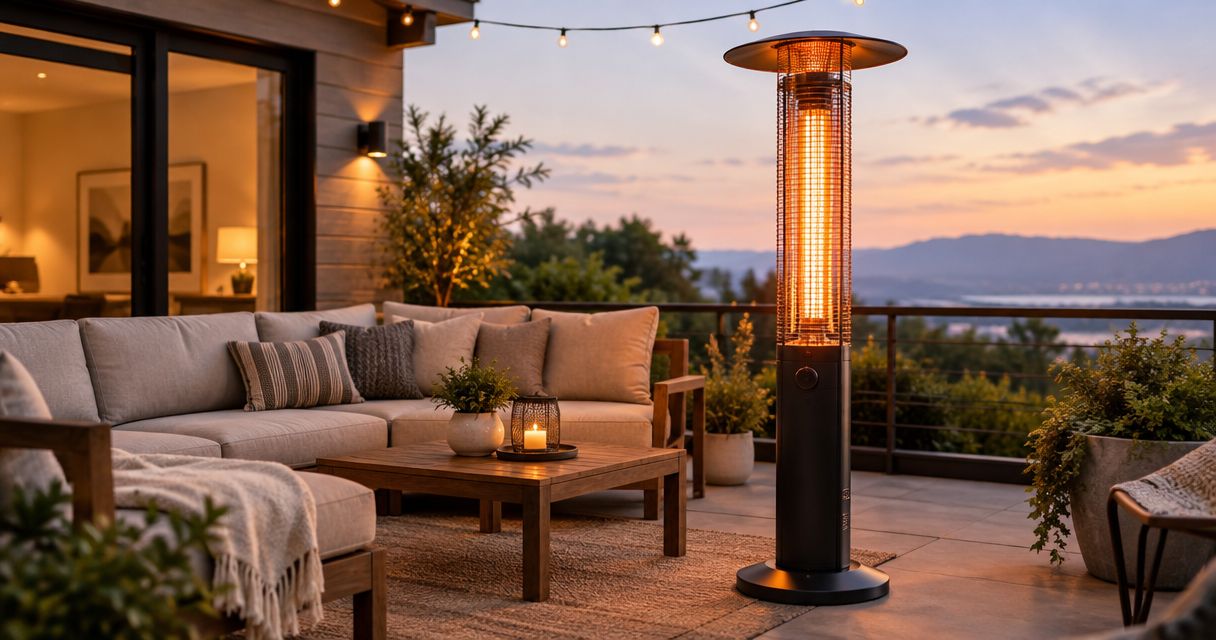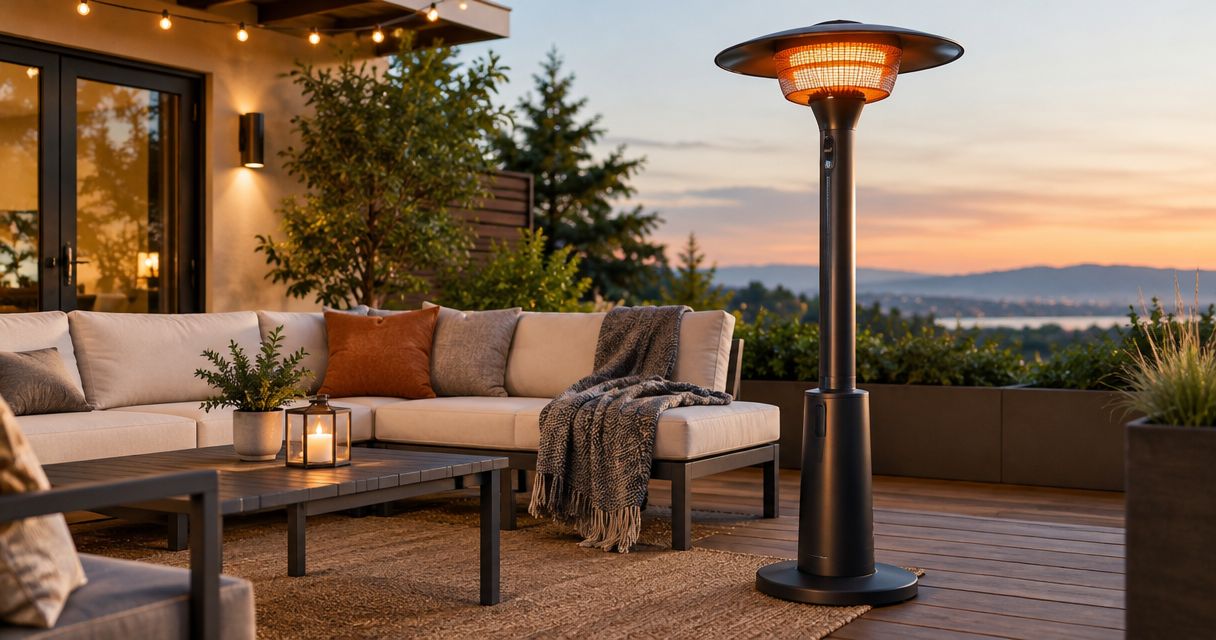
Best overall for a fixed seating area: an outdoor-rated wall-mounted infrared electric patio heater. Best for keeping walls clear: a ceiling-mounted infrared heater. Best for changing layouts: a freestanding electric heater. This 2026 guide ranks heater formats by installation and seating needs, rather than treating unlike products as interchangeable.
- Choose a wall-mounted infrared electric patio heater for a permanent seating area with suitable mounting space.
- Choose ceiling-mounted infrared heat when overhead installation works better than wall mounting.
- Choose a freestanding electric heater when furniture moves, but keep its base and cord outside walking routes.
- Unitedfireplaces suits homeowners comparing fireplaces, fire pits, and outdoor living products.
Why this matters
A patio heater needs to put warmth where you sit. Heating an open patio is different from heating an enclosed room, so an indoor room-size claim does not establish outdoor comfort.
Start with your seating arrangement, mounting surfaces, and electrical supply. Those details decide which heater format belongs on your shortlist before controls or appearance enter the picture. Unitedfireplaces sells fireplaces, fire pits, and outdoor living products; distinguish those categories from dedicated patio heaters when planning your space.
The best electric patio heater is the outdoor-rated model whose permitted installation puts heat directly toward your seating. A larger-looking unit does not fix a poor mounting position.
What makes the best electric patio heater?
Use these six criteria when comparing electric patio heaters in 2026:
- Outdoor suitability: The manual must permit your intended location and exposure. A roof does not turn an indoor appliance into an outdoor heater.
- Heat direction: Look for a permitted position that directs radiant heat toward occupied seats, not an empty walkway.
- Electrical fit: Match the heater's voltage, connection method, and circuit requirements to your installation.
- Mounting and clearances: Confirm approved mounting surfaces, installation height, and distances from combustible materials.
- Daily usability: Check how you switch the heater on, adjust it, and shut it down from your usual seating position.
- Layout impact: Account for stands, cords, doors, furniture movement, and access for maintenance.
Treat the first four criteria as pass-or-fail requirements. Convenient controls cannot make an unsuitable installation safe.
Electric patio heaters at a glance
The order below favors a permanent seating area first, then alternatives for different layouts. Each recommendation assumes a model specifically approved for the proposed outdoor installation.
| Heater format | Best for | Standout feature | Key limitation |
|---|---|---|---|
| Wall-mounted infrared heater | Fixed seating beside a suitable wall | Directs heat without a floor stand | Seating must suit the permitted mounting position |
| Ceiling-mounted infrared heater | Seating beneath a suitable overhead structure | Leaves walls and floor space clear | Requires approved overhead mounting and clearances |
| Freestanding electric heater | Patios with changing furniture layouts | Can be repositioned when disconnected and cool | Base and cord occupy usable space |
| Tabletop electric heater | A compact table-centered seating arrangement | Places the heater close to a specific gathering point | Competes with table space and needs careful cord routing |
These are format recommendations, not claims that every heater in a category performs equally. Compare individual manuals before choosing a model.
1. Wall-mounted infrared: best for fixed seating
A wall-mounted infrared electric patio heater directs radiant heat from a fixed position. It makes sense when your chairs or dining table stay in the same area and a suitable wall faces that space.
Infrared heat warms people and surfaces in its path. Position matters: furniture outside that path does not receive the same direct exposure, even when it belongs to the same patio.
Wall-mounted infrared heater pros:
- Keeps a heater stand off the patio floor.
- Gives permanent seating a repeatable heating position.
- Keeps the appliance separate from dining-table space.
Wall-mounted infrared heater cons:
- Requires an approved mounting surface and clearances.
- Becomes less useful when furniture moves away from its heating direction.
- Requires you to plan the electrical connection at the mounting location.
Best for: A dining or lounge area with a stable layout beside a suitable wall.
For your 2026 shortlist, compare the proposed mounting position with the manufacturer's placement instructions. Do not assume an adjustable bracket permits every angle.
Verdict: Buy this format for permanent seating only after the mounting position and electrical requirements check out.
2. Ceiling-mounted infrared: best for keeping walls clear
A ceiling-mounted infrared heater directs heat downward from an approved overhead position. It suits a seating area beneath a structure that supports the installation specified in the heater's manual.
The benefit is space. You avoid a floor stand and do not need a nearby wall in the right position. The trade-off is a more demanding overhead installation check.
Ceiling-mounted infrared heater pros:
- Leaves the patio floor free of a heater base.
- Keeps wall space available for doors and other uses.
- Lets you plan heat around a fixed seating zone from above.
Ceiling-mounted infrared heater cons:
- Depends on suitable overhead structure and attachment points.
- Requires careful clearance checks around roofing and nearby materials.
- Makes the electrical connection and maintenance access part of the overhead plan.
Best for: A covered seating area where approved overhead mounting works better than wall mounting.
Check the heater's rules for recessed, suspended, or surface-mounted installation separately. Permission for one mounting method does not establish permission for another.
Verdict: Buy this format when the overhead structure, clearances, and wiring support the exact installation.
3. Freestanding electric: best for changing layouts
A freestanding electric patio heater places the heating element on its own stand or base. You can change its location when the appliance is off, disconnected, and cool, subject to the manufacturer's instructions.
That flexibility suits furniture arrangements that change between dining and lounging. It does not remove the need for a suitable outlet, a stable surface, or safe separation from surrounding materials.
Freestanding electric heater pros:
- Does not require a permanent wall or ceiling bracket.
- Allows repositioning between suitable locations.
- Lets you keep the heater separate from a dining tabletop.
Freestanding electric heater cons:
- Occupies floor space that furniture or people also need.
- Adds a cord-routing problem near walking areas.
- Requires attention to stability and the model's outdoor exposure limits.
Best for: A patio whose seating changes and has suitable power near each intended heater position.
Draw the base and cord into your layout before choosing this format. A heater that fits between chairs on paper is unsuitable if guests must step across its cable.
Verdict: Buy for layout flexibility; skip if the only workable position blocks circulation.
4. Tabletop electric: best for table-centered seating
A tabletop electric heater places the appliance on a suitable table rather than on a floor stand or building surface. Consider it when your seating centers on that table and the appliance's instructions permit the arrangement.
Proximity is the attraction, but the table becomes part of the installation. Check its material, stability, available surface area, and required separation from everything placed nearby.
Tabletop electric heater pros:
- Avoids attaching a heater to the building.
- Keeps the appliance at the gathering point.
- Leaves floor space free of a separate heater stand.
Tabletop electric heater cons:
- Takes space away from food, drinks, and table settings.
- Brings a hot appliance close to everyday activity.
- Still requires a safe electrical route to the table.
Best for: A table-centered arrangement with an appropriate surface and a cord route that stays out of foot traffic.
Do not select this format merely because the appliance looks compact. Its operating clearances, not its footprint alone, determine whether it belongs on your table.
Verdict: Hold until you confirm the table, surrounding clearances, and cable route all meet the instructions.
Match the heater to the space before shopping
For a 2026 patio project, work through these decisions in order. A failed installation check should change your shortlist immediately.
- Seating layout: Mark where people actually sit and which way the heater would face.
- Outdoor suitability: Confirm the exact model permits the proposed exposure and location.
- Mounting clearances: Check the supporting surface and required separation from nearby materials.
- Electrical supply: Confirm voltage, circuit capacity, connection method, and outdoor electrical protection.
- Safe access: Keep doors, walking routes, controls, and maintenance access usable.
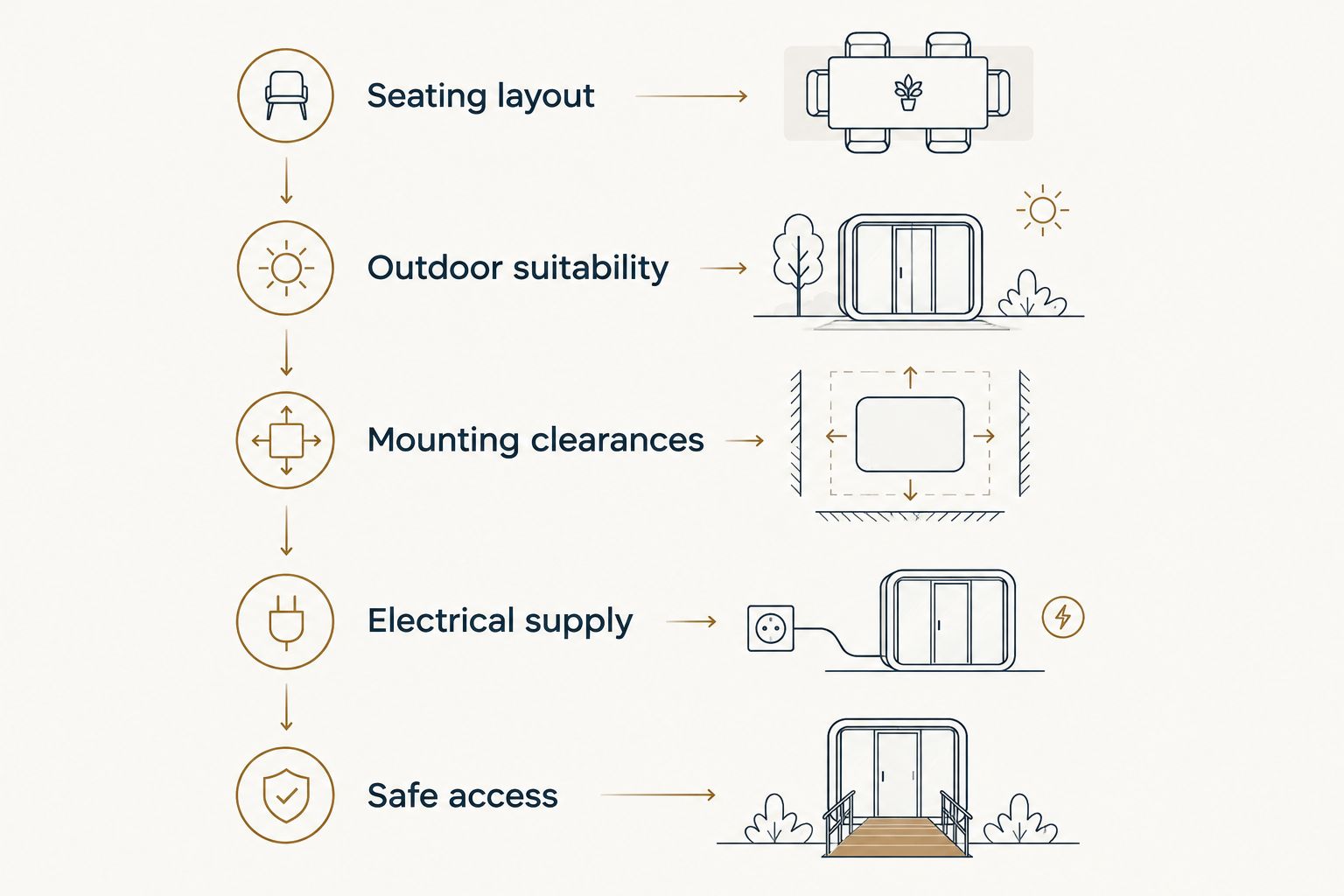
Walk the layout rather than judging it from a product photo. Open the nearby door, pull out dining chairs, and check the route guests use to reach the table. These ordinary movements expose conflicts that an empty-patio measurement misses.
Understand the electrical label
For illustration, a heater rated at 1,500 watts on a 120-volt supply draws 12.5 amps, calculated by dividing watts by volts. Running a 1,500-watt heater continuously for 1 hour uses 1.5 kilowatt-hours of electricity.
These figures describe an electrical example, not a recommended model or circuit design. They do not establish that an existing circuit can safely serve the appliance alongside other loads.
Have a qualified electrician assess new wiring or an uncertain circuit. Follow the heater's instructions on direct outlet connection, hardwiring, and extension cords; do not treat a longer cable as an installation plan.
Separate heating from flame appearance
An electric fireplace and an electric patio heater serve different buying priorities. A fireplace emphasizes a visible hearth feature; a dedicated patio heater should be selected around outdoor heat delivery and installation suitability.
Some electric fireplaces explicitly permit outdoor installation, but that designation does not establish the same heating pattern as a patio heater. Compare the actual appliance instructions rather than assuming that every electric heating product belongs outdoors.
For Unitedfireplaces shoppers comparing electric patio heater options with fire features, decide whether the project needs directed warmth, a visible flame feature, or separate appliances for those jobs. That choice prevents appearance from replacing the installation checks.
How these heater formats are ranked
This 2026 ranking prioritizes a fixed seating area, clear floor space, and a repeatable heating position. Wall-mounted infrared comes first when a suitable wall exists; ceiling-mounted infrared addresses overhead installations; freestanding and tabletop formats address different layout constraints.
The criteria are outdoor suitability, heat direction, electrical fit, mounting requirements, usability, and layout impact. The order does not claim measured performance differences between individual products.
Use the ranking as a decision tree. If the first format fails your mounting check, move to the format that fits your space rather than forcing the first choice into an unsuitable location.
Which electric patio heater should you choose?
Choose an outdoor-rated wall-mounted infrared heater as the default for permanent seating beside a suitable wall. Choose ceiling mounting when an approved overhead position serves the seating better.
Choose freestanding only when repositioning matters enough to justify its base and cable. Choose tabletop only when the table itself provides a suitable operating location without crowding everyday use.
For your 2026 purchase, make the installation manual the final filter. Controls and appearance help separate suitable models; neither rescues a model that fails the outdoor, clearance, or electrical checks.
FAQ
What's the best electric patio heater for a fixed seating area?
An outdoor-rated wall-mounted infrared heater is the default choice when a suitable wall faces permanent seating. Confirm the permitted mounting height, direction, clearances, and electrical requirements before selecting a model.
Is a ceiling-mounted patio heater better than a freestanding heater?
A ceiling-mounted heater is better for keeping floor space clear when an approved overhead installation is possible. A freestanding heater is better for changing layouts, but its base and cable need safe placement.
Can I use an indoor electric heater on a covered patio?
Do not use an indoor-only electric heater on a patio. A roof does not replace the manufacturer's approval for the intended outdoor location and exposure.
How much electricity does an electric patio heater use?
A 1,500-watt heater running continuously for 1 hour uses 1.5 kilowatt-hours of electricity. Actual consumption depends on the appliance's power setting and how long its heating element operates.
Can I plug an electric patio heater into an extension cord?
Follow the heater manufacturer's connection instructions, including any prohibition on extension cords. If the existing outlet does not support a compliant installation, arrange a suitable electrical connection instead.
Is an electric fireplace the same as an electric patio heater?
No. An electric fireplace provides a hearth feature, while a patio heater should be selected for outdoor heat delivery. Outdoor suitability and heating behavior must be checked for the exact appliance.
Does a larger electric patio heater always heat more seating?
No. Appliance size alone does not establish useful outdoor heating coverage. Output, heat direction, mounting position, and the seating arrangement all affect whether people receive direct warmth.
One last thing
Check the patio with the chairs pulled out, not neatly tucked away. The safest-looking heater position in an empty space can become a blocked route once people sit down.
Unitedfireplaces shoppers planning an outdoor living project should settle that layout before choosing the appliance. Buy for the patio as you use it, not as it looks without people.