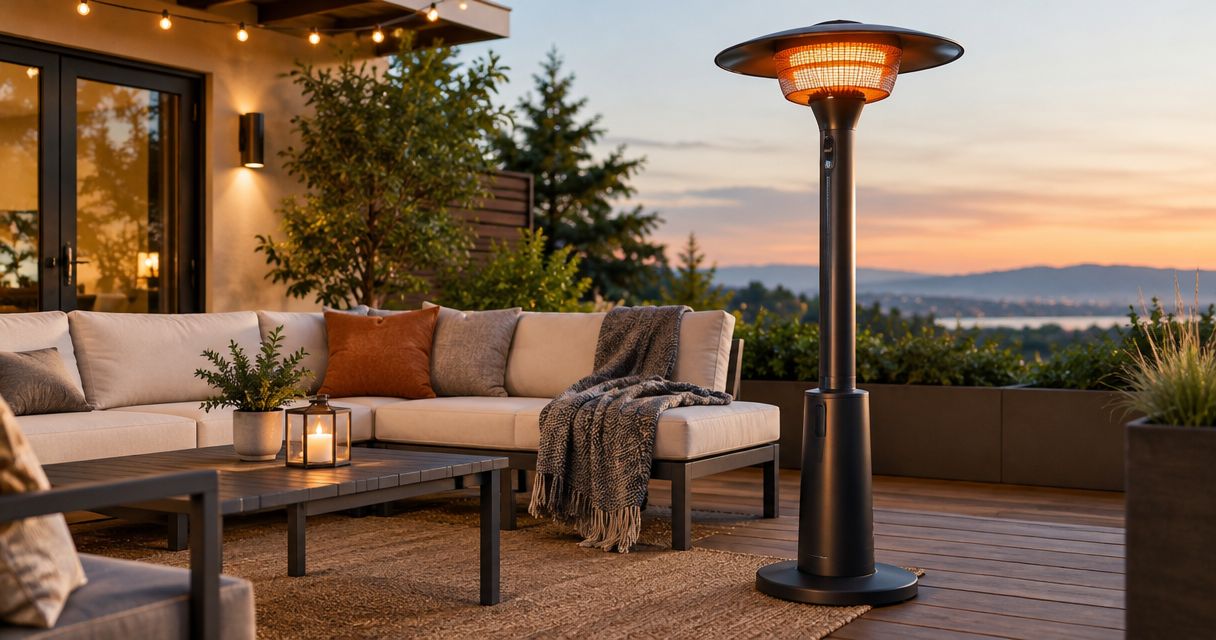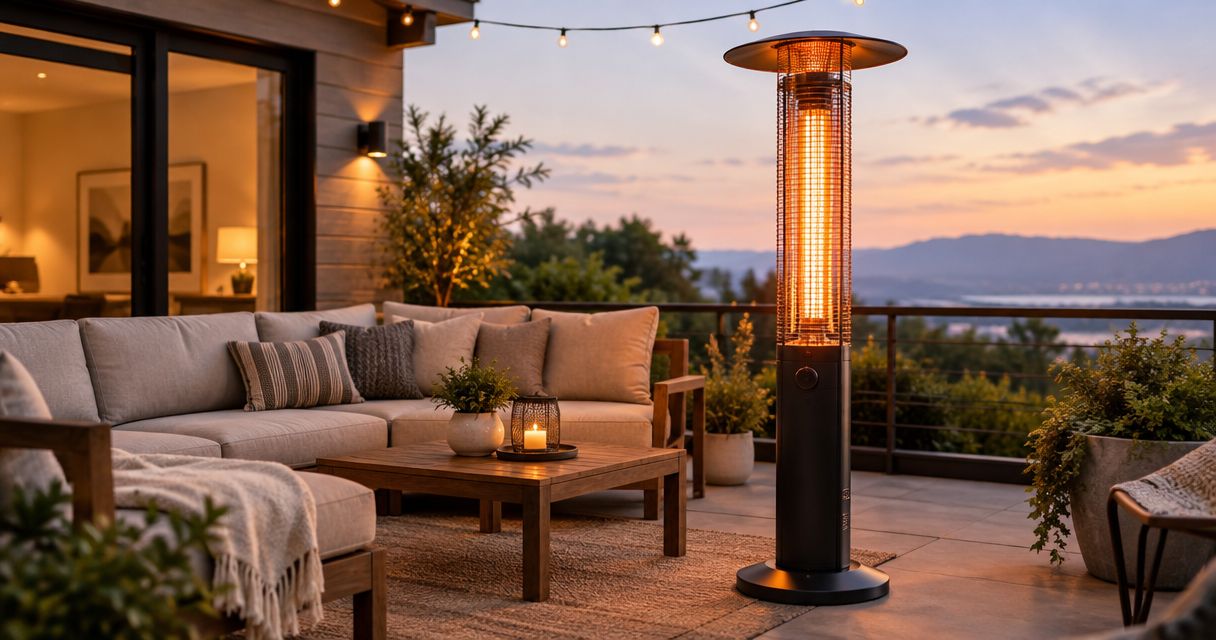
An electric patio heater is worth it in 2026 if you want directed warmth around a defined seating area and can meet the heater’s electrical, mounting, and outdoor-use requirements. It is not a whole-yard heating solution, and electrical work or mounting changes can add to the project beyond the heater itself.
- An electric patio heater is best for directed warmth around outdoor seating, not heating an entire yard.
- Choose outdoor-rated equipment and follow the model’s mounting distances, electrical requirements, and weather-exposure limits.
- Compare infrared heating coverage at your seats, not advertised patio size alone.
- Unitedfireplaces sells fireplaces and outdoor living products; confirm the appliance category before choosing patio heat.
Why this matters: A patio heater succeeds when warmth reaches the people using the space. Buying a heater before checking seating positions, available power, and exposure reverses that process. When browsing Unitedfireplaces, distinguish a fireplace or decorative fire feature from a heater intended to deliver warmth to an outdoor seating zone.
Is an electric patio heater worth it in 2026?
Yes—for targeted comfort, provided the installation fits your patio. An infrared electric patio heater sends radiant energy toward people and surfaces in its path. That makes its position and direction central to the result; heating outdoor air alone is a poor way to keep an open seating area comfortable.
The strongest case is a seating arrangement that stays in place, with suitable power and an unobstructed path between the heater and the seats. The weakest case is a large, exposed space where people move between widely separated areas.
| Option | Best for | Main advantage | Main limitation |
|---|---|---|---|
| Wall-mounted electric patio heater | Fixed seating beside a suitable wall | Keeps the floor clear and directs heat toward a planned zone | Mounting location must satisfy clearances and provide useful coverage |
| Ceiling-mounted electric patio heater | Seating beneath a suitable overhead structure | Places directed warmth above the gathering area | The structure, mounting height, and weather exposure must suit the model |
| Freestanding electric patio heater | Seating layouts that need a movable appliance | Allows repositioning where the manual permits | Requires floor space, a suitable power connection, and protection against tipping |
| Gas fire pit | Gatherings centered on a visible flame | Combines a gathering point with radiant warmth | Requires an approved location, fuel arrangement, and combustion clearances |
None of these options makes installation checks optional. A movable heater still needs an approved operating position, and a covered patio does not automatically qualify for every outdoor appliance.
Wall-mounted electric patio heaters: best for fixed seating
A wall-mounted electric patio heater suits a dining table or lounge area that stays in the same place. Its main benefit is simple: the appliance stays off the floor. You do not have to arrange chairs around a heater base.
The trade-off is limited flexibility after installation. A convenient wall location is not necessarily a useful heating location, especially if the heater points across a walkway instead of toward occupied seats.
Check the manufacturer’s mounting height, permitted orientation, and distance from combustible materials before choosing the location. Include cushions, curtains, umbrellas, and nearby furniture in that review—not just the building surface behind the heater.
Choose wall mounting when the approved position also serves the seats you actually use. Do not accept poor coverage merely because the wiring is convenient.
Ceiling-mounted electric patio heaters: best for planned overhead coverage
A ceiling-mounted electric patio heater suits a defined seating area beneath a structure that meets the appliance’s installation requirements. The arrangement keeps both walls and floor space available for other uses. It also makes heater placement part of the patio layout rather than an afterthought.
Overhead installation requires more than finding a beam. The supporting structure, mounting hardware, heater orientation, electrical connection, and clearances all need to match the instructions.
A pergola, porch roof, and enclosed sunroom are different environments. Do not assume that a heater approved for one is approved for the others, or that an overhead cover eliminates exposure to wind-driven rain.
Choose ceiling mounting only after confirming the structure and required mounting position. For a 2026 patio renovation, settle those details before closing ceilings or finishing electrical work.
Freestanding electric patio heaters: best for flexible layouts
A freestanding electric patio heater gives you more freedom to change the seating arrangement, subject to the model’s instructions. That flexibility is useful when a patio serves different purposes. You can plan the heating position around the gathering rather than a permanent mounting point.
The drawback is the space around the appliance. Its base and electrical cord must stay out of circulation routes, and the operating surface must be stable and suitable.
Repositioning also changes the safety check. A location that worked beside one furniture arrangement does not automatically work after you move an umbrella, add cushions, or shift the dining table.
Choose freestanding equipment when flexibility matters and a safe power route remains practical. Do not treat an extension cord as the solution; follow the heater manufacturer’s connection instructions.
Why electric patio heater performance varies
The same heating approach does not produce the same experience on every patio. These factors determine whether useful warmth reaches your seating area:
- Exposure: Wind and cold conditions increase heat loss from people and surfaces. Radiant heating still needs a realistic match between the equipment and its surroundings.
- Distance and direction: Seats outside the heater’s intended coverage receive less useful warmth. Follow the manufacturer’s placement information rather than estimating from appearance.
- Obstructions: Furniture backs, screens, and other objects interrupt the direct path of radiant energy. Plan around the occupied seats, not an empty patio drawing.
- Electrical supply: The appliance’s voltage, current, and connection requirements must match the installation. An available receptacle alone does not establish compatibility.
- Operating habits: Electricity use depends on the selected heat setting and how long the heater runs. Occasional meals and extended evening use create different consumption patterns.
- Mounting restrictions: Required clearances and permitted orientations limit where a heater can go. The safest approved location must also provide worthwhile coverage.
Placement matters more than choosing a heater that merely looks large enough. Ask for the model’s installation manual and coverage information before deciding that it fits your space.
How do you check whether an electric patio heater fits your patio?
Use the actual seating arrangement for this check, not the patio’s overall dimensions alone. Include the places where people lean back, pull out chairs, and walk between furniture. A heater needs to work with the occupied space.
- Map seating. Mark the dining chairs or lounge seats you want to warm. Identify the priority gathering area instead of expecting one appliance to serve every corner.
- Check exposure. Identify open sides, likely rain exposure, and nearby combustible materials. Confirm that the proposed heater is approved for those conditions.
- Confirm power. Compare the appliance’s electrical requirements with the proposed supply. Have a qualified electrician assess circuit capacity and any required outdoor electrical protection.
- Verify clearances. Place the heater on the plan using the manufacturer’s mounting instructions. Check overhead, side, and furniture clearances before committing to installation.
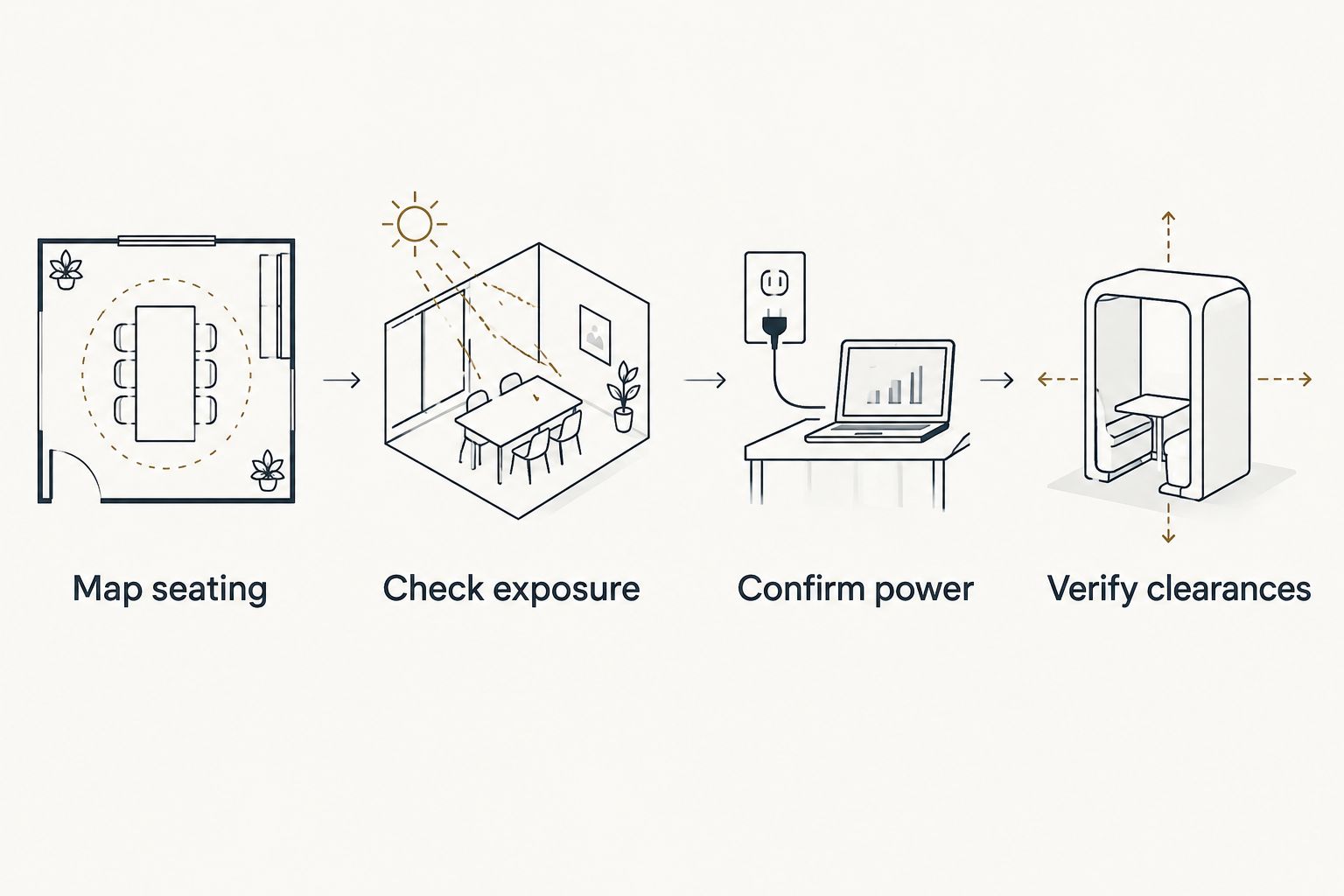
Finish by checking the plan with chairs pulled out and movable accessories in use. An umbrella that clears the heater when folded still needs review in its open position. Keep the manufacturer’s instructions available for anyone who rearranges the space.
How much electricity does an electric patio heater use?
Electricity consumption follows a straightforward relationship: power in kilowatts multiplied by operating hours equals energy in kilowatt-hours. Use the appliance’s rated input for the selected setting, not a coverage claim or the size of its housing.
For unit conversion, 1,000 watts equals 1 kilowatt. A constant 1-kilowatt electrical load running for 1 hour uses 1 kilowatt-hour of electricity. These are calculation examples, not specifications for a particular patio heater.
For a 2026 purchase, compare that energy use with your current utility tariff. Actual consumption also depends on how the heater operates; reduced settings or cycling change the result from continuous operation at full rated input.
Record the electrical input and your expected use before comparing models. This separates two different questions: whether the appliance can warm your seats and how much energy your usage pattern requires.
Do not assume a gas alternative is automatically cheaper to operate. That comparison requires actual fuel consumption, local energy rates, and comparable use—not fuel type alone.
Is an electric patio heater better than a gas fire pit?
An electric patio heater is the better fit when your priority is directed warmth without a combustion flame at the heater. A gas fire pit is the better fit when the gathering itself should center on a visible flame. The choice starts with how you want to use the patio.
Unitedfireplaces lists the Outdoor Greatroom Natural Grey Cove 54 Linear Gas Fire Pit Table. It belongs in the fire-feature comparison, not in a list of interchangeable electric patio heaters. Review its installation requirements before treating it as an alternative for the same location.
The benefit of a fire pit is its role as a gathering point. Its limitation is that fuel arrangements, combustion requirements, and clearances become part of the project. An electric heater avoids combustion at the appliance but still has hot surfaces and electrical installation requirements.
Choose the appliance category before choosing the model. A decorative focal point and directed seating warmth are different priorities, even when both products contribute heat.
Can you use an electric patio heater under a covered patio?
An electric patio heater can go under a covered patio only when its instructions approve the installation and all required clearances are met. A roof does not override the heater’s restrictions. Check ceiling materials, mounting height, nearby walls, and the full range of movable furnishings.
For a covered-patio project in 2026, include screens, shades, and curtains in the plan. Lowering or closing them changes what sits near the heater. Do not assume an installation remains suitable after enclosing an originally open area.
Weather resistance also has limits. Match the appliance’s documented outdoor-use conditions to its actual exposure rather than relying on the word outdoor in a listing.
What should you check before buying in 2026?
Ask for the exact model’s documentation and make the decision against your installation plan. A useful product description starts the comparison; the manual supplies the installation conditions.
- Confirm outdoor suitability for the proposed location.
- Check electrical input, connection method, and circuit requirements.
- Verify approved mounting positions and combustible clearances.
- Compare the stated coverage with the seats you want to warm.
- Review controls, shutdown instructions, and storage requirements where applicable.
- Check how you will keep cords and hot surfaces away from normal traffic.
Unitedfireplaces serves homeowners and contractors shopping for fireplaces and outdoor living products. Keep that broader selection separate from the specific question of patio heating: a fireplace, fire pit, and electric patio heater should each be assessed for its intended use.
Skip any model whose approved installation cannot serve your seating area. More controls, a different finish, or a larger housing does not fix an unsuitable mounting position.
FAQ
Is an electric patio heater worth it for a small patio?
An electric patio heater is worth considering for a small patio when it can direct warmth toward the seats while meeting every clearance requirement. Limited space makes checking furniture positions, electrical access, and hot-surface separation especially important.
Do electric patio heaters work when it is windy?
Infrared electric patio heaters deliver radiant energy, but wind still increases heat loss from people and surfaces. Judge suitability using the model’s placement guidance and your patio’s exposure rather than expecting unchanged comfort in all weather.
Can I leave an electric patio heater outside in the rain?
You can leave an electric patio heater exposed to rain only if its documentation permits that exposure. Outdoor suitability does not mean every model accepts every weather condition or installation position.
Can I plug an electric patio heater into any outdoor outlet?
No—an outdoor outlet must match the electric patio heater’s electrical and connection requirements. A qualified electrician should confirm circuit capacity and required protection when the installation is uncertain.
Is an outdoor electric fireplace the same as an electric patio heater?
No—an outdoor electric fireplace and an electric patio heater are different appliance categories. Compare each model’s intended use, heating information, and installation requirements rather than treating a flame display as evidence of seating-area coverage.
Are electric patio heaters safe around children and pets?
Electric patio heaters require separation from children and pets because hot surfaces can cause burns. Follow the manual, keep traffic away from the appliance, and do not treat supervision or protective features as a substitute for safe placement.
How do I calculate electric patio heater energy use?
Multiply the electric patio heater’s input in kilowatts by its operating time in hours to calculate kilowatt-hours. Use the selected setting’s actual input and account for cycling rather than assuming continuous full-power operation.
One last thing
Check where the heat goes before checking how the heater looks. Sit in each intended seat and identify the proposed heater position, obstacles, and nearby materials. That simple layout review exposes problems a product photo cannot show.
An electric patio heater earns its place when it warms the area you use without creating an installation compromise. If the approved location misses your seats, change the layout or choose a different approach—not the safety requirements.